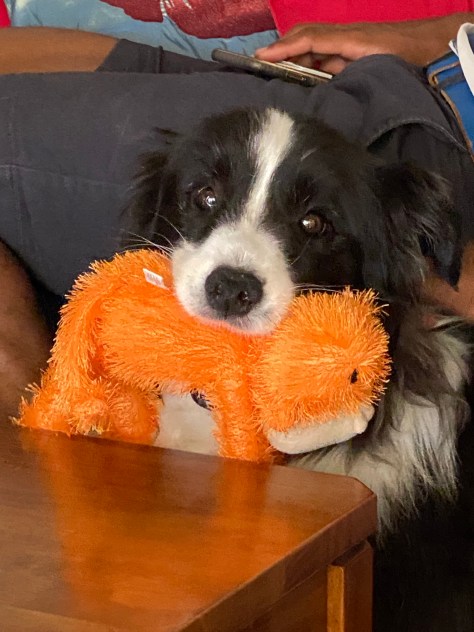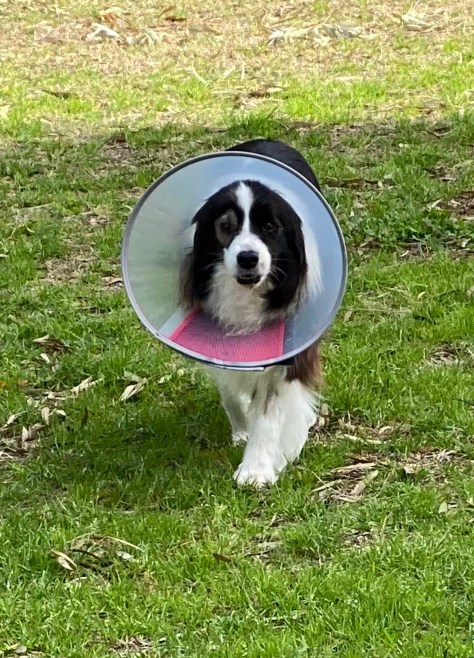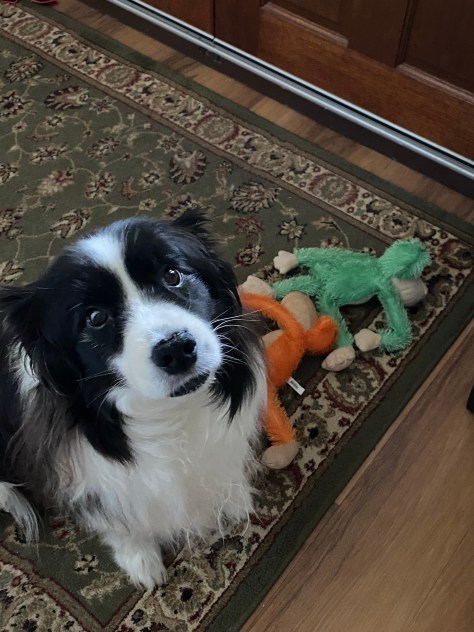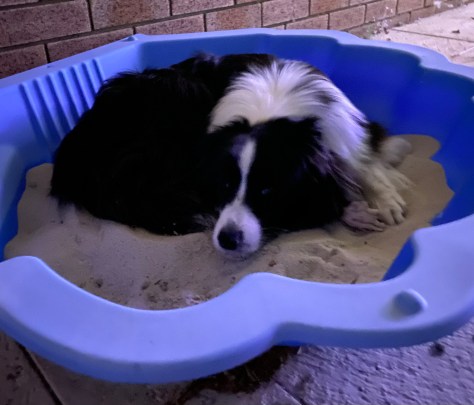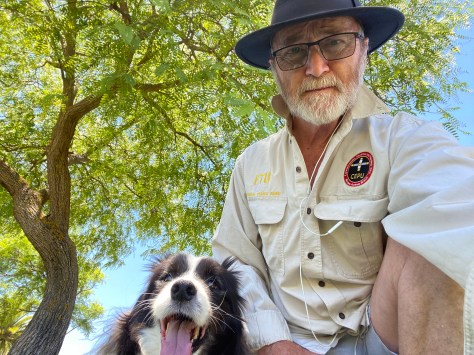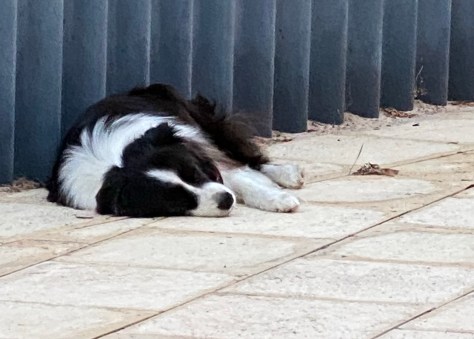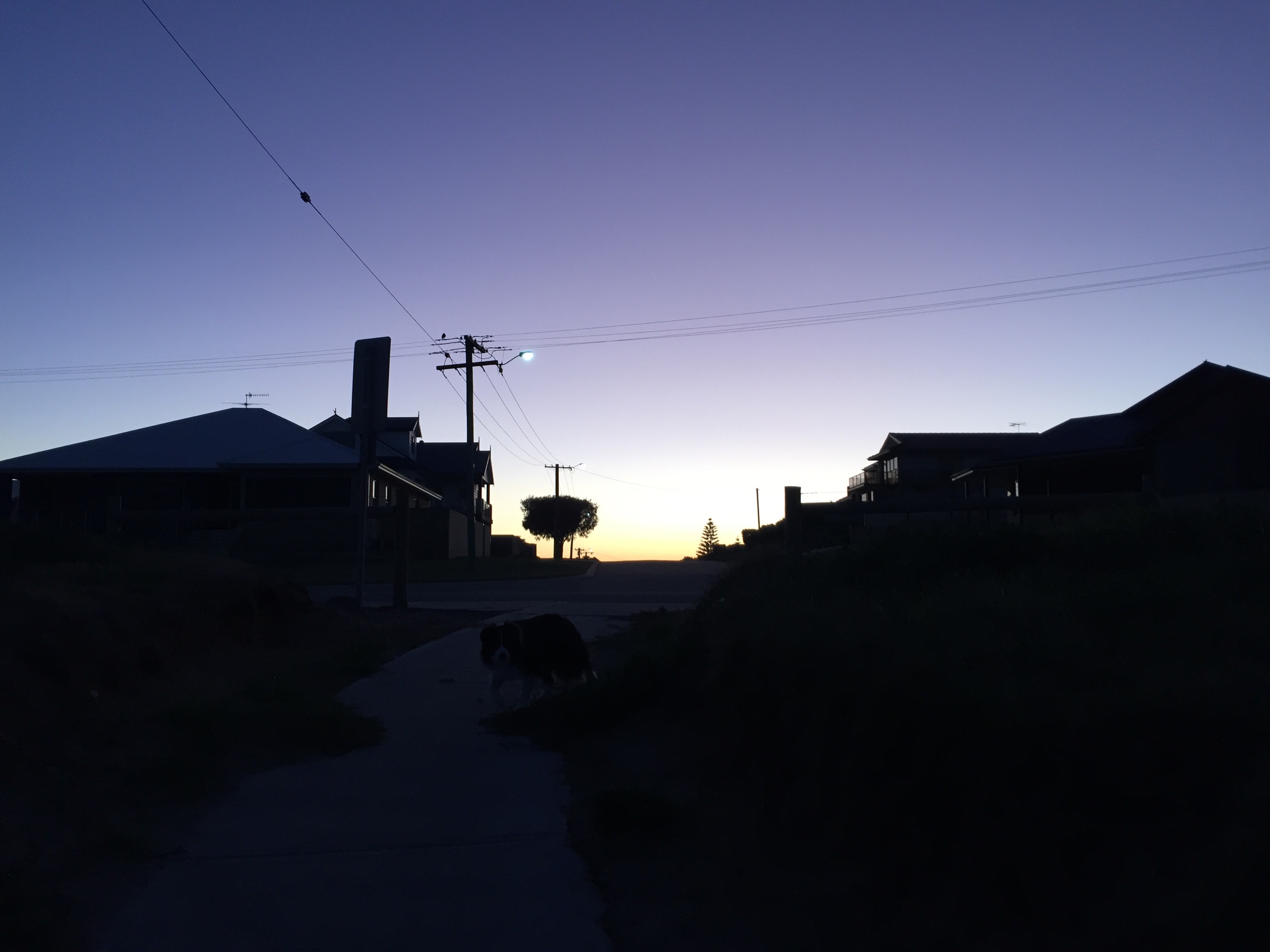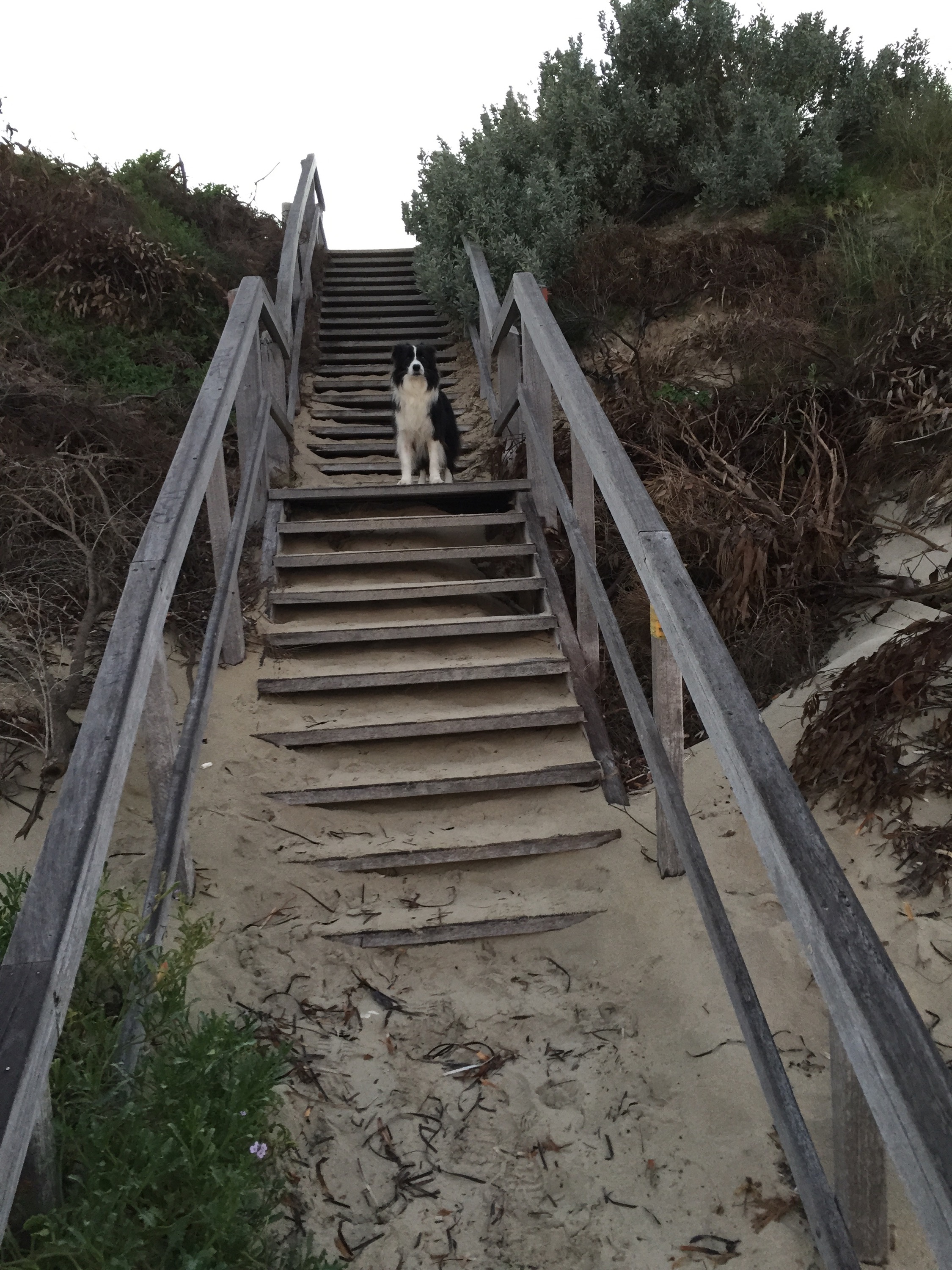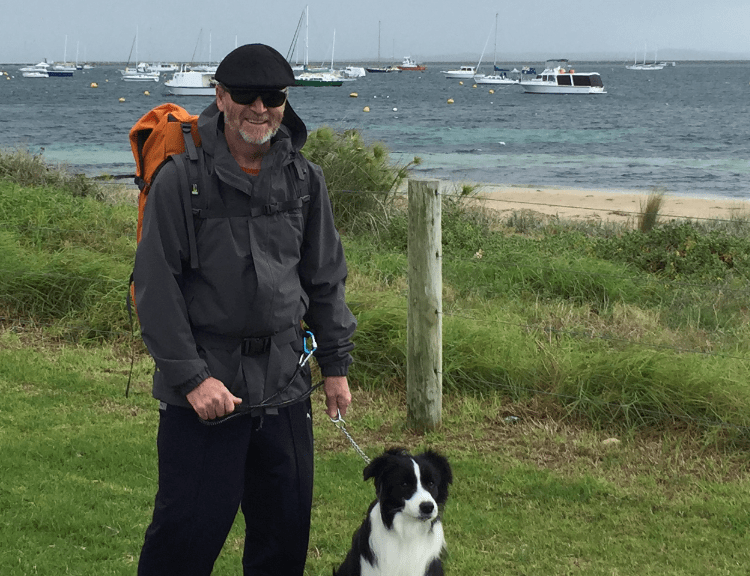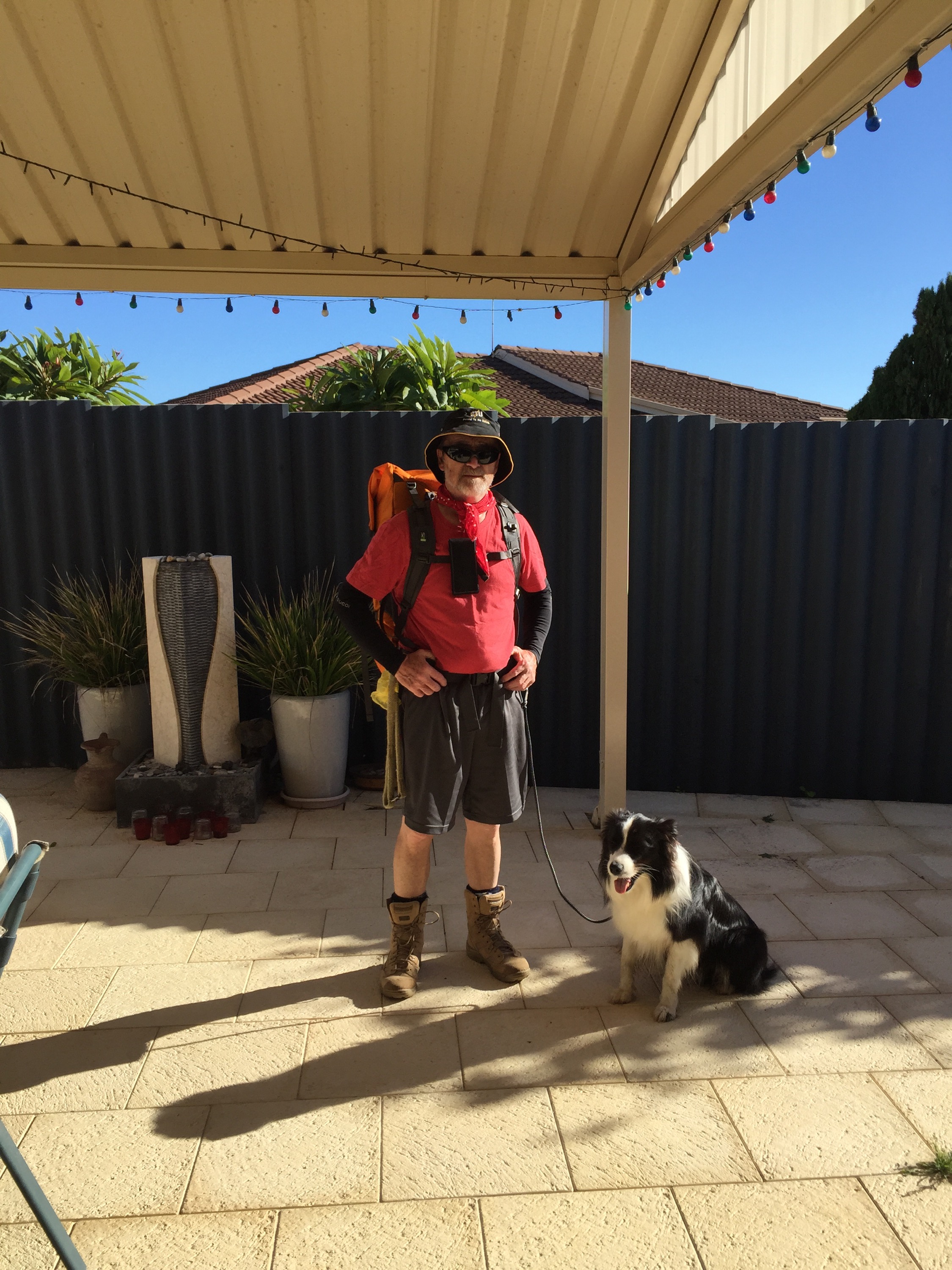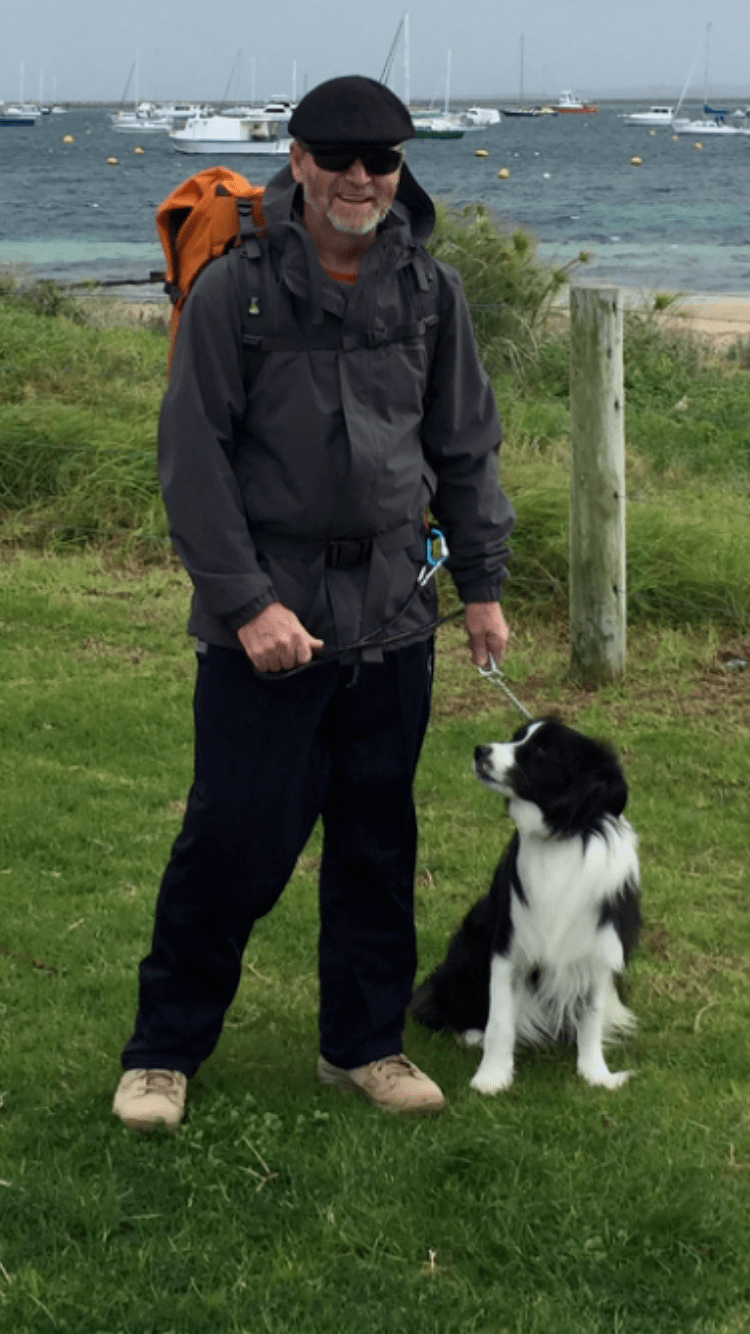
People have asked who is Rebus?


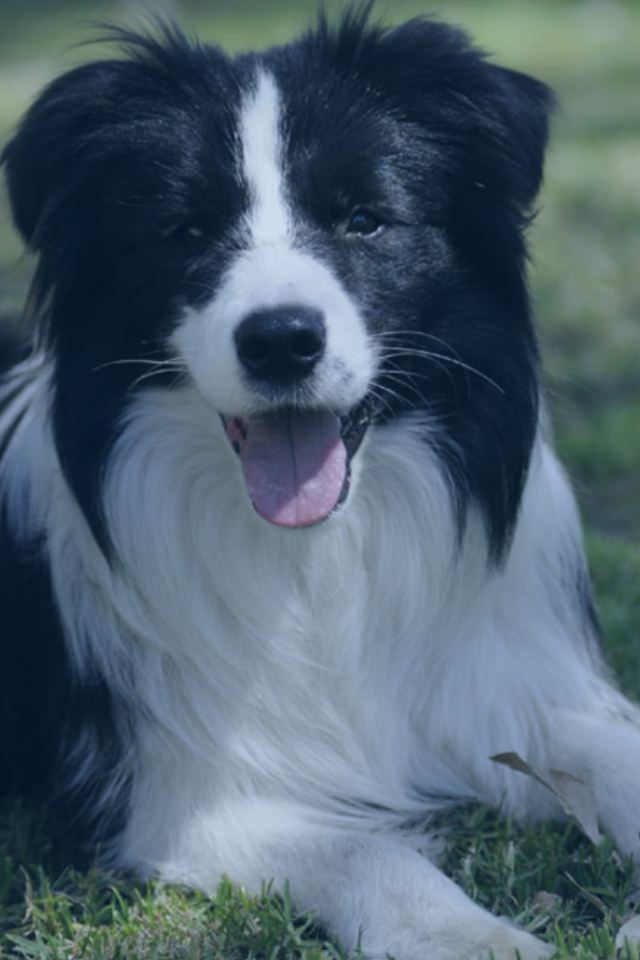
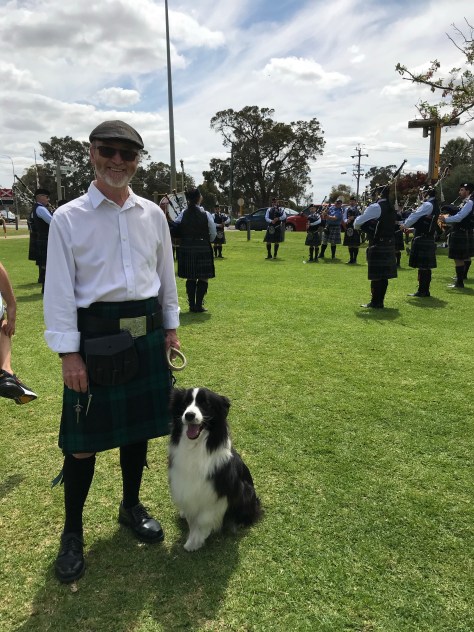
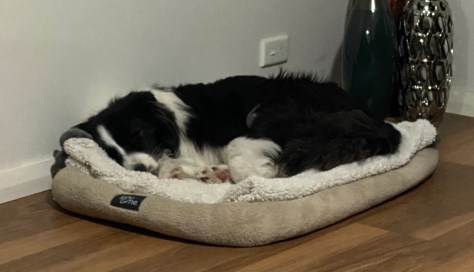
Rebus is my training companion.  A Border Collie, with a fantastic nature. 

He is named after Ian Rankin’s fictional Edinburgh detective.  

He has enjoyed going out for our hikes and our runs, when I was trading to walk the Kokoda Trail.

 He really looked forward to our walks until last week’s 5 hour walk.  I think that took him by surprise. 

He sits waiting at the door, as I get ready to go and is always anxiously waiting to join me.

PS: I do treat him as a human and I hope he does not take that as an insult.

Heh Rebus, get ready for next week. 

First 5 hour walk

  
Again an early start. Just left home when the rain started. 

This walk was harder. Upping the time from 3 to 4 hours seemed to flow quite easily but 4 to 5 started to take its toll. So we and by that I mean me and Rebus walked 34,003 steps, 191 floors (according to Fitbit) 24.01kms. And yes we were tiered. 

I am thinking about buying hicking poles now that we have upped the anti. 

I am thinking that future posts should have more about MIC and some more history of Kokoda. 

Some more info on why I am waking the Kokoda

Some info on the work that MATES In Construction do:
Each year more than 2500 die from suicide in Australia – 1885 are male and 637 are female. Each year over 190 Construction workers die by suicide – this is five to six times more than workplace fatalities. Young workers, labourers and operators are of highest risk. Using WHO statistics it is estimated that while 190 Construction workers will die from suicide each year, 485 will be permanently disabled following a suicide attempt and 2366 will need to have time off work to recover from a suicide attempt.
While suicide is a leading cause of death for men under the age of 44 – suicide is preventable. This is why MATES In Construction performs such a vital and lifesaving role in the Construction industry. MIC provides a system of support for sites – raising awareness, making access to help easy and ensuring the help offered is appropriate for the person in need. Support is free of charge for individuals and companies in the industry so MIC relies solely on the donations and sponsorships from within and outside the industry.

Typical Kokoda Training Week

I thought I would outline a typical week’s training so far. Starting tomorrow I will have to increase my output. 

Monday night walk with pack, at present 8kg going up to 10kg next week. Walk for 1 hr going to lift this to 90 minutes per night . 40 min. Light weights. 

Tuesday 1 hour run at night. 40 min. Light weights. 

Wednesday was the same as Monday but from next week I will be doing stairs. Approximately 100 flight in 1 hour. 

Thursday the Same as Tuesday

Friday 100 flights of stairs. 

Saturday rest day. 

Sunday have been doing a 3 hour walk with pack. From tomorrow I will raise that to 4 hours. 

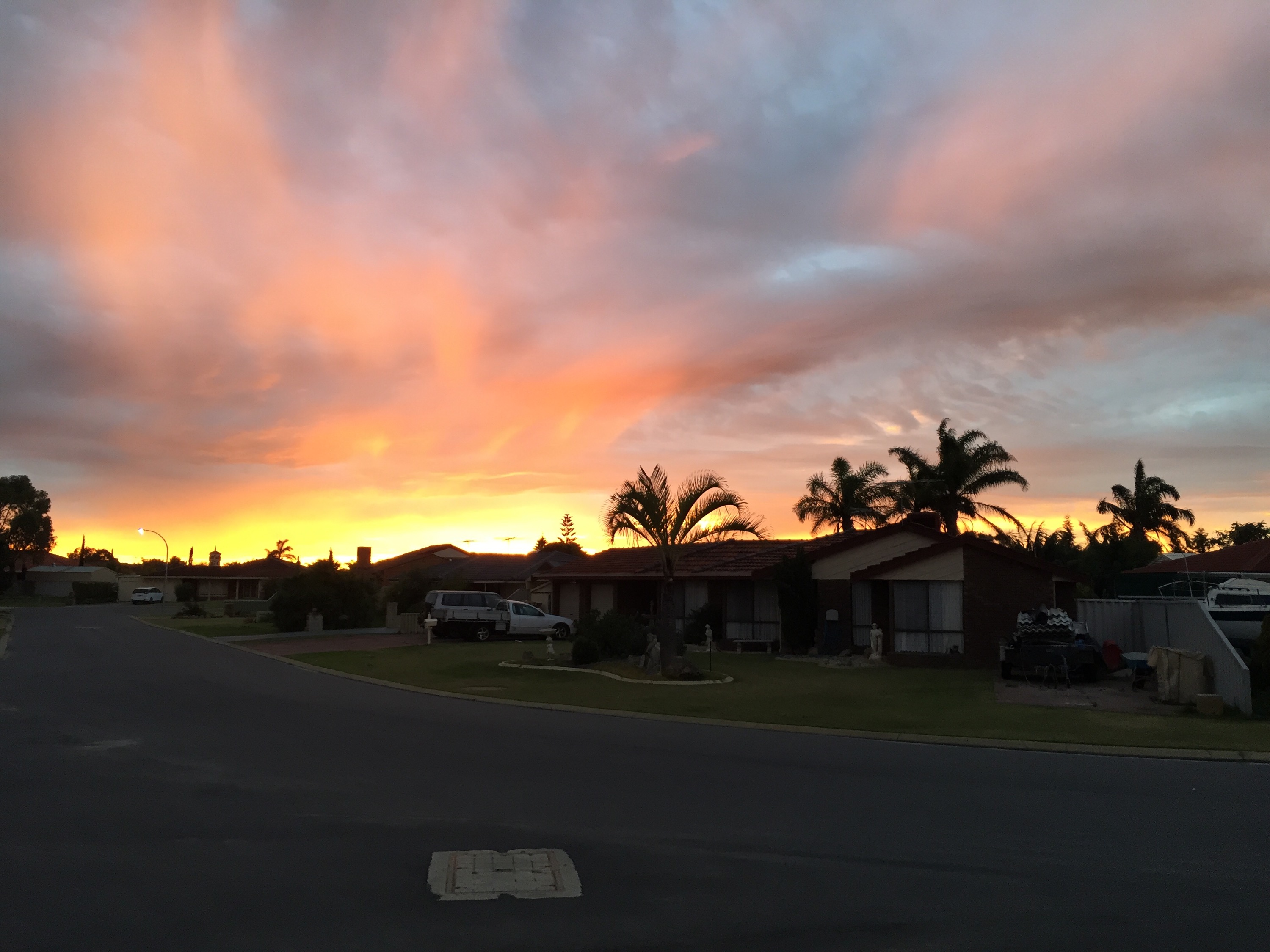
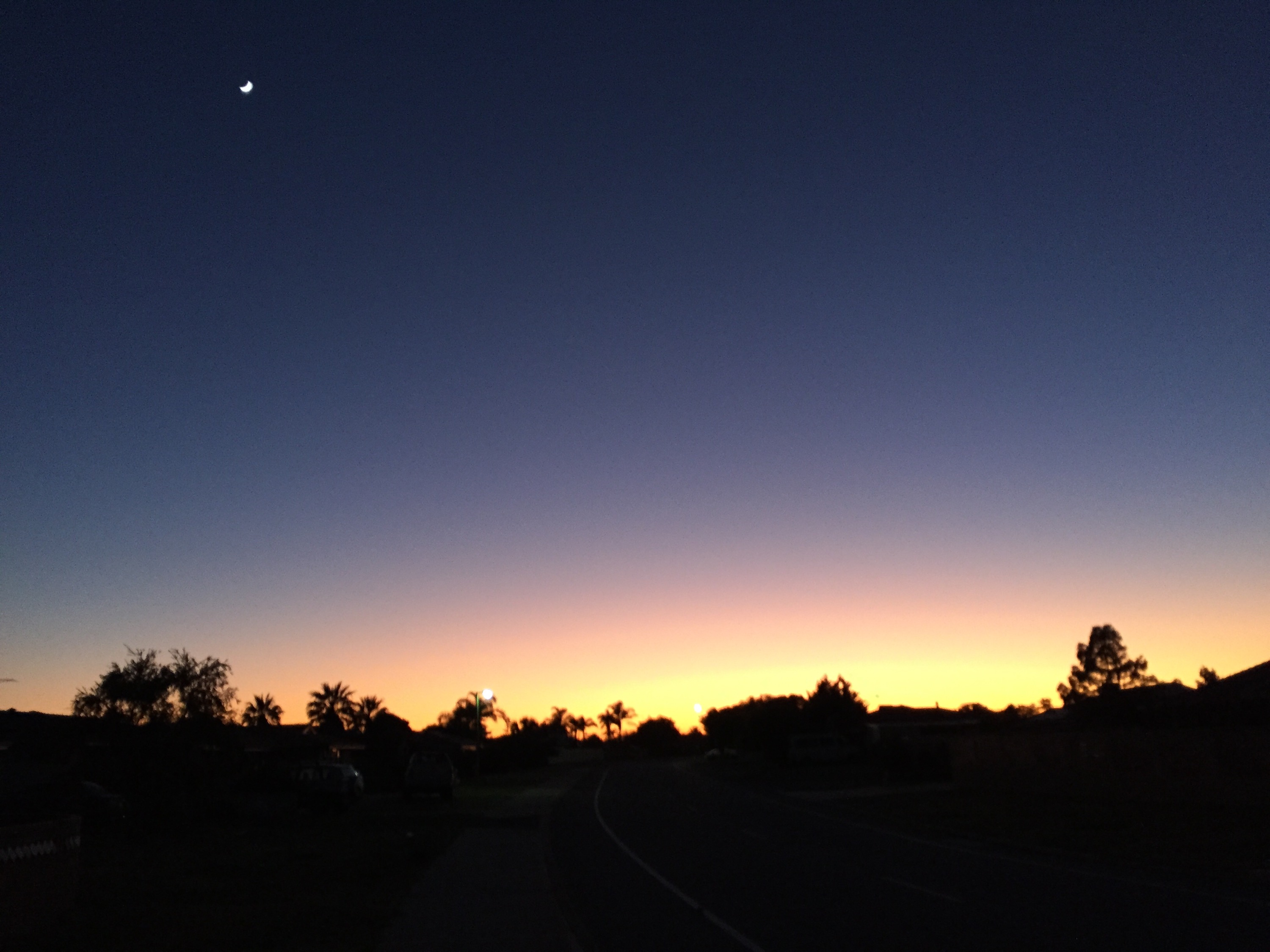
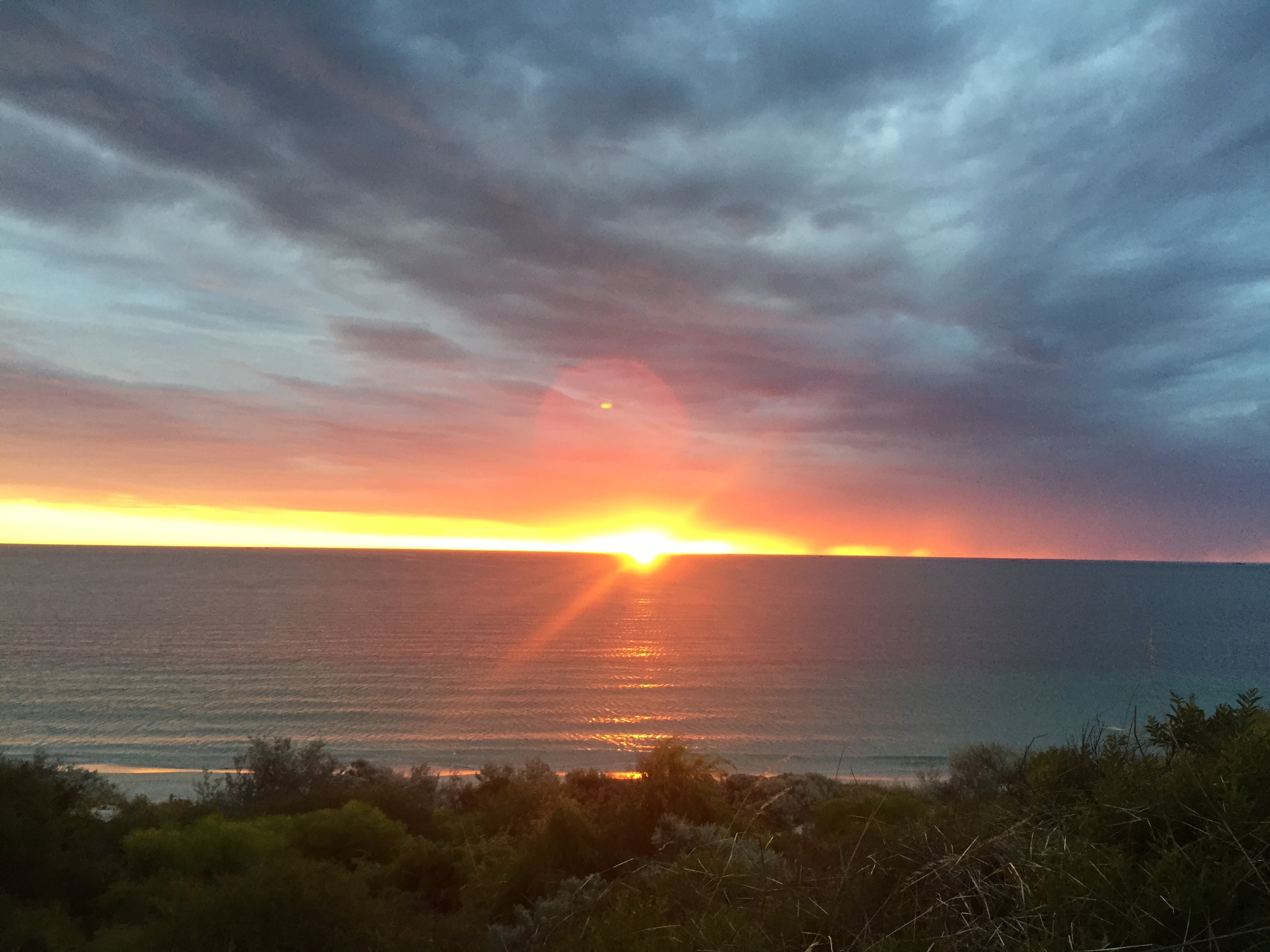
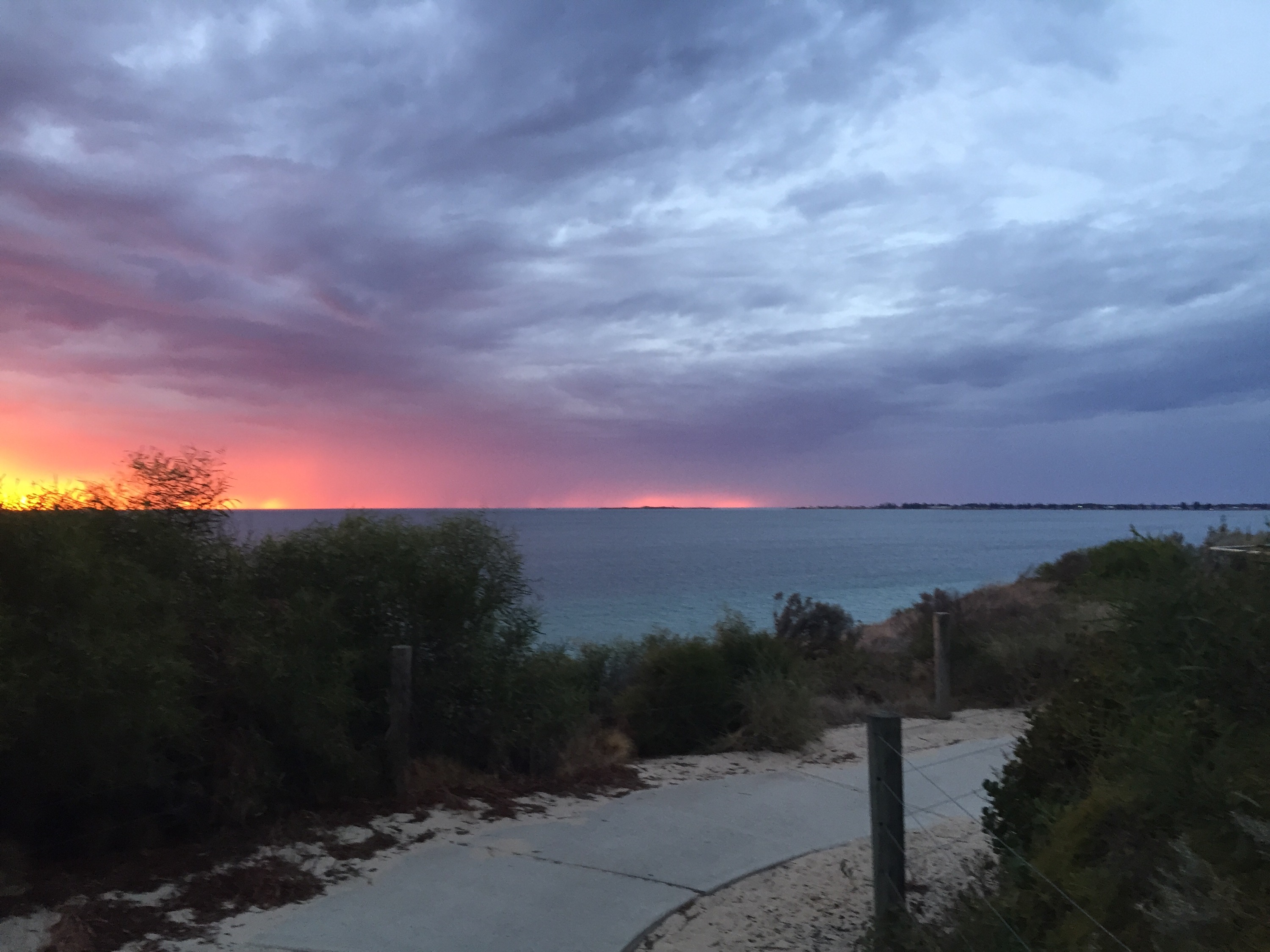
These pictures were  taken when I was out for an evening walk as the sun sets over Warnbro Sound. 


Why I am doing the Kokoda

So why am I doing the Kokoda Track?

I will give more detail as time goes on, but first I will give a very brief overview of what I am doing and why?
There is an organisation in Australia called Mates in Construction (MIC).  As I have said I will give more info later but essentially MIC was established to try and highlight, discuss and inform workers of the unacceptable and disproportionately high levels of suicide in the construction industry. My union, the ETU, along with other unions and employers, have decided to support MIC and have them run an initial 1 hour  induction course on sites, which is followed by two other tiers of training for those who want to become connectors to help workers in need.  The workers are not trying to give the assistance but rather be able to direct workers to where they can get help or assistance.

Along with other branches of the ETU. The WA branch made a decision to become a sponsor and promoter of MIC.

I had agreed to attend a fundraising function in Perth in April this year.  Two days before attending the MIC fundraiser I attended the funeral of a young apprentice who tragically took his own life.

At the fundraiser the question of taking part in the Kokoda Track was raised.  It was pointed out that this event would be timed to coincide with International Suicide Prevention Day.

I thought about becoming involved but had some reservations, not so much about my physical ability, although I knew that it would mean heaps of training, but more about potential consequences to my health, i.e. Malaria.

I checked things out and although I know that there are no guarantees, if you take the right precautions things should be fine.  Note: should be fine.

A brief intro to Kokoda:

The Kokoda track or trail is in Papua New Guinea, which at the time of the second world war a territory of Australia.

“What made this campaign uniquely grim was the proximity of the fighting and extraordinary terrain over which the two armies clashed. It was indeed, at the time, a ‘knife fight out of the stone age’, as historian Eric Bergerud wrote. The Kokoda campaign is distinguished for three other reasons: it was the first land defeat of the Japanese Imperial Army; it marked the start of the great roll-back of the Japanese troops from the southernmost point of the Pacific empire; and it was the battle that saved Australia from certain isolation – and possible invasion, as it was perceived at the time – in the Pacific War .”  (Paul Ham, Kokoda, 2005, p. xi)


Start of my Kokoda Trainings 


We went out for a 3 hour walk on Sundany. Got soaked 4 times but enjoyed the walk all the same.
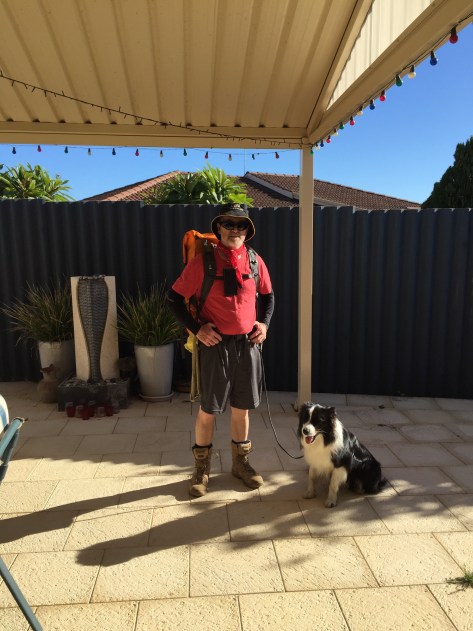

First time out with rucksack.

Help reach my fundraising target.

So why am I doing the Kokoda Track?

I will give more detail as time goes on, but first I will give a very brief overview of what I am doing and why?

There is an organisation in Australia called Mates in Construction (MIC).  As I have said I will give more info later but essentially MIC was established to try and highlight, discuss and inform workers of the unacceptable and disproportionately high levels of suicide in the construction industry. My union, the ETU, along with other unions and employers, have decided to support MIC and have them run an initial 1 hour  induction course on sites, which is followed by two other tiers of training for those who want to become connectors to help workers in need.  The workers are not trying to give the assistance but rather be able to direct workers to where they can get help or assistance.

Along with other branches of the ETU. The WA branch made a decision to become a sponsor and promoter of MIC.

I had agreed to attend a fundraising function in Perth in April this year.  Two days before attending the MIC fundraiser I attended the funeral of a young apprentice who tragically took his own life.

At the fundraiser the question of taking part in the Kokoda Track was raised.  It was pointed out that this event would be timed to coincide with International Suicide Prevention Day.

I thought about becoming involved but had some reservations, not so much about my physical ability, although I knew that it would mean heaps of training, but more about potential consequences to my health, i.e. Malaria.

I checked things out and although I know that there are no guarantees, if you take the right precautions things should be fine.  Note: should be fine.

A brief intro to Kokoda:

The Kokoda track or trail is in Papua New Guinea, which at the time of the second world war a territory of Australia.

“What made this campaign uniquely grim was the proximity of the fighting and extraordinary terrain over which the two armies clashed. It was indeed, at the time, a ‘knife fight out of the stone age’, as historian Eric Bergerud wrote. The Kokoda campaign is distinguished for three other reasons: it was the first land defeat of the Japanese Imperial Army; it marked the start of the great roll-back of the Japanese troops from the southernmost point of the Pacific empire; and it was the battle that saved Australia from certain isolation – and possible invasion, as it was perceived at the time – in the Pacific War .”  (Paul Ham, Kokoda, 2005, p. xi)