Linda and Ann at our stop off at Glencoe Inside the recently completed replica of a community hut. Drove through Fort William to the Glenfinnan monument. Down the narrow winding road, only to get there and find both car parks full. There were hoards of people but nowhere to park. We all agreed we saw the monument but after a 10 point turn😂 decided to carry on to our Spean Bridge accommodation. On the way to our accommodation we stoped at Neptune’s Staircase. At the South end of the 9 connecting lock gatesAt the top. Some boats waiting to go down. Built by Thomas Telford between 1803 and 1822, it is the longest staircase lock in Scotland. This amazing feat of engineering raises the canal by 19m (62ft) over a quarter of a mile of continuous masonry and takes around 90 minutes for a boat to travel up or down the locks.Our accommodation was very nice, with a lovely garden. As a bonus there was a guitar and we had brought along Ann’s Ukulele.
Managed to share the guitar, David got it most of the time. And I taught him Uke cords.
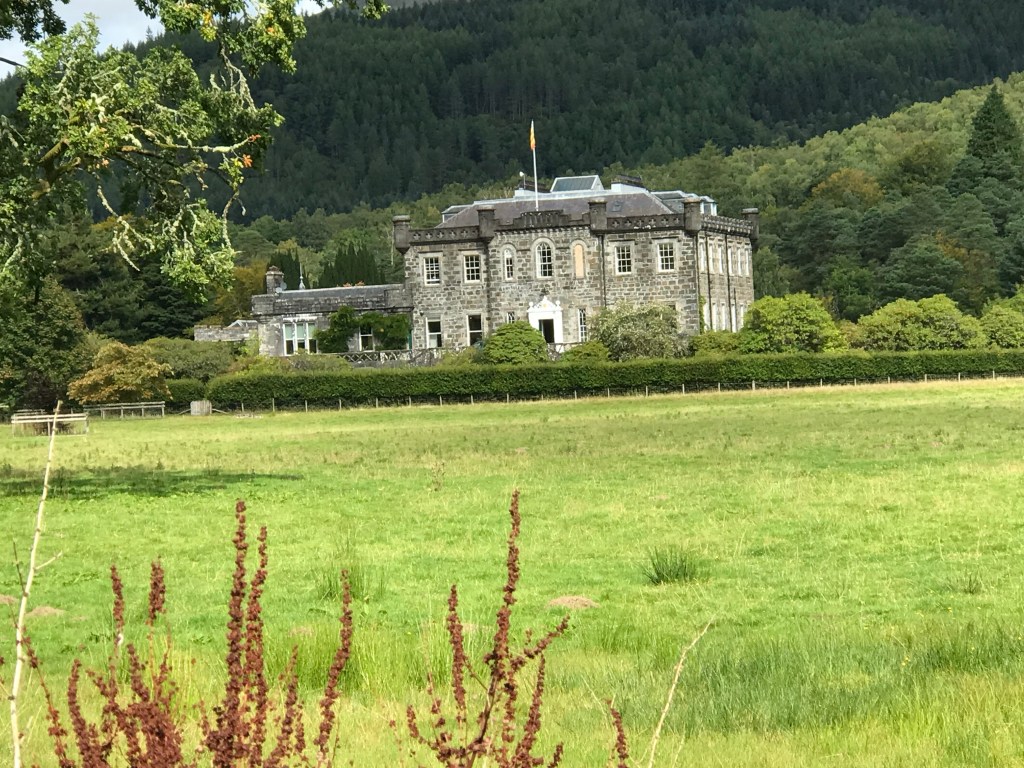
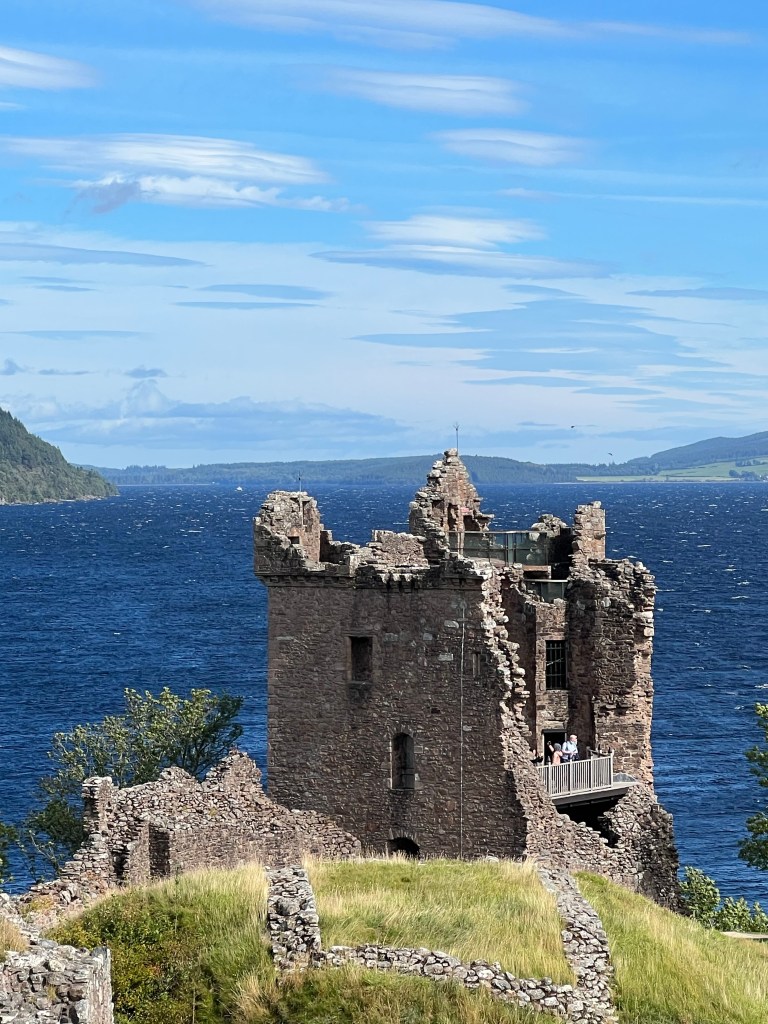
Unveiled in 1952 with the monument looking over the training grounds of the Commandos who were based at Achnacarry Castle. Achnacarry has a long association with Clan Cameron: Sir Ewen Cameron of Lochiel built the original castle in 1655. This was destroyed by government troops led by the Duke of Cumberland after the Battle of Culloden. However, “New Achnacarry” was built near the same site in Scottish Baronial style in 1802. In the Second World War, it housed the Commando Basic Training Centre and the area retains close ties to British Commandos, the United States Army Rangersand similar units from other allied nations.Here is the short history so far. Through primary documents Linda traced my McLaughlan’s back to circa 1750. From there the trace goes cold, because they were in Ireland and earlier records are lost. In 2022 I took the Big Y DNA test and contacted the McLachlan haplogroup. No matches, they suggested I try the Cameron haplogroup. I did and there are direct matches with my last known match at 1550. At some point between 1550 and 1750 a Non Paternal incident (out of wedlock) child was born and obviously raised as a McLachlan/McLaughlan in Coruanan. I have written more on a seperate blog, my DNA. The old tower, looking on to Loch Ness. Walking around the castle ruins. Taking a rest sitting at a window seat. Although you can’t see, due to the initial low light compensation, Loch Ness is just below. The memorial cairn at Culloden Battlefield, was erected in 1881, in memory of the fallen Jacobites. The inscription on the plaque of the 20 feet high cairn reads : ‘The Battle of Culloden was fought on this moor 16th April, 1746. The graves of the Gallant Highlanders who fought for Scotland and Prince Charlie are marked by the names of their clans’.Days after the battle, those killed in battle, or executed as they lay wounded, by orders of the Duke of Cumberland, were buried in mass Clan graves. The Culloden Battlefield is an official war graveyard. So if you go there be sure to show respect. The McLachlan’s burial site. The Camerons. It was a McLachlan who carried the clan Cameron standard. He survived and saved the standard, which he hid. It was discovered again in the 1800’s and is now at Achnacarry castle. I had not seen a black highland cow before. The Battle of Culloden was the last pitched battle fought on British soil. It saw the Jacobite army of Prince Charles Edward Stuart defeated by the army of the Hanoverian King George II under the leadership of the Duke of Cumberland. The battle put an end to Jacobite hopes of restoring the Stuart dynasty to the British throne.A lovely afternoon walking around Loch Lomond where my mum and dads ashes were spread. Fountain Park, with its very decorative cast iron fountain, is the oldest park in Paisley. Down at Largs for the Viking festival Tried on a very heavy assassin’s helmet.







 Les McLaughlan